






Brewing Tea at Home
Brewing Tea at Home
We invite you to brew tea together with Chaynaya Pochta. Let’s put all the special tea accessories aside and try making tea in ordinary home conditions. All we need is a porcelain teapot, a few mugs, a plastic electric kettle for boiling water, a cha hai, water, and of course the tea itself.
Drinking GREEN TEA
(Long Jing, Huang Shan Mao Feng, Ye Shen)
What we have:
2 faceted glasses, a plastic Polaris kettle.
What we do:
Never use untreated tap water for tea. It is best to choose soft water: filtered or bottled. It is worth remembering that water is the foundation of tea infusion, and its taste and smell directly affect the taste and aroma of the finished tea.
We fill the kettle with good water and turn it on. In kettles of this type, water often becomes overboiled. If you slightly lift the lid just before the kettle switches off, you can see large bubbles and vigorous boiling. Usually, the temperature sensor turns the kettle off only when the water is already too overheated for brewing tea. That is why we recommend watching the process and switching the kettle off at the stage when only small bubbles begin to appear in the water. At that point the water is still насыщена oxygen and is well suited for brewing tea.
Green tea needs water at around 60–70°C. To reach that temperature, we pour the water into one of the glasses and wait about 30 seconds. Into the second glass, we place a pinch of green tea. Then we pour water from the first glass over the tea and leave it for one minute. Green tea can be brewed 2–3 times. The third infusion can even be made with water from the same kettle — by then it will already have cooled down a little.
White and yellow teas can be prepared in a similar way. These teas can also be brewed in a teapot. The most important thing is to take the water temperature and steeping time into account.
Drinking LIGHT OOLONGS
(Tie Guan Yin, milk oolong, ginseng oolong, Si Zi Chun)
What we have:
a 500 ml porcelain teapot, 2 mugs or cups of 150–250 ml each, a fairness pitcher, and a Polaris kettle.
What we do:
We boil the water as described above. Then we leave the kettle with the lid open for one or two minutes — during this time the water reaches a suitable temperature. We rinse the porcelain teapot, the mugs, and the fairness pitcher with hot water. We put tea into the teapot, but not too much — roughly enough to lightly cover the bottom.
Let’s try drinking tea using the short-infusion method. This means taking a small amount of tea and brewing it in brief infusions of 15–20 seconds or a little longer, rather than for several minutes. We pour hot water into the porcelain teapot to about one third of its volume. The first infusion may be drunk if desired, although traditionally it is poured away. We find it interesting as a first introduction to the tea’s flavor.
We pour the finished infusion from the teapot into the fairness pitcher and then into the mugs. When the tea has been drunk, be sure to smell the mug — it will retain a sweet aroma. Repeat this process several more times: one third of a teapot of water, fairness pitcher, mugs, the aroma of the empty cup. You decide how many infusions to make. Do it in the way that tastes best to you. The thinner the walls of the vessel, the more expressive the aroma, because such ware cools more quickly.
Drinking DARK OOLONGS
(Da Hong Pao, Shui Xian)
and RED TEA
(Dian Hong, Xiao Zhong)
What we have:
the same teapots, mugs, and fairness pitcher.
What we do:
The sequence of actions remains the same. The main difference is the higher water temperature. These teas are usually brewed with almost boiling water. The steeping time can also be increased slightly: 20–40 seconds is usually enough. However, this is not a strict rule, only a guideline. Try brewing them with cooler water as well, to find your own ideal version.
Drinking SHU pu-erh and SHEN pu-erh
What we have:
a teapot, mugs, a fairness pitcher, and a Polaris kettle.
What we do:
We heat the water until small bubbles appear, then rinse the vessels with boiling water. We add the tea — not much, a piece about the size of a thumb phalanx, which is around 5–6 grams. Pu-erh is always rinsed before brewing, whether it is shu or shen. The first infusion, and sometimes even the first two infusions, are not drunk but poured away — this removes dust, crumbs, and possible bacteria, because this tea is naturally fermented.
Shu pu-erhs are usually steeped for about a minute, and with each subsequent infusion the time is increased by around 30 seconds. The finished tea is poured into the fairness pitcher and then into the mugs. Usually, shu pu-erh can withstand 4–6 infusions. Shen pu-erh is more sensitive to water temperature. If it starts to become bitter, try using slightly cooler water.
How to Brew Tea Properly
Drink tea, experiment with different brewing methods — in a mug, a gaiwan, or a teapot — in whatever way suits the moment. Enjoy the process and stay healthy.
We also place short brewing guidelines for each specific tea on the packaging. There you will find the appropriate amount of tea for one brewing session, the water temperature, the steeping time, and the number of possible infusions. For example, in the case of red tea, the label will show the name, and we will write the weight by hand.
There are not that many ways to prepare tea. We will discuss brewing in a porcelain gaiwan, a clay teapot, a ceramic mug, and a glass vessel. But above all, we want to emphasize one thing: always follow common sense and your own taste. Our guidelines are only recommendations. With time, everyone develops their own style of brewing tea.
Every tea has its own unique and unmistakable aroma. Do not deprive yourself of the chance to experience it fully — brew tea in thin-walled porcelain, clay, or glass. And do not forget to smell the cup after finishing the tea.
We photographed the basic stages of a tea session: warming the vessels, the first acquaintance with the tea, transferring the leaves into the gaiwan or teapot, the first infusion — rinsing the tea, as well as subsequent infusions using Tie Guan Yin as an example.
Below we present a more detailed description of brewing different kinds of tea. Let us begin with one of the most popular categories — light oolongs.
LIGHT OOLONGS
Using Mao Xie as an example
Brewing oolong in a gaiwan (120–150 ml)
Bring the water to a boil and remove the kettle from the heat as soon as medium-sized bubbles appear.
Fill the gaiwan and the remaining vessels with boiling water.
While the vessels are warming, get acquainted with the tea: pour it into your palm or into a cha he, bring it to your nose, and breathe in and out over the leaves several times. In this way you awaken the tea, prepare it for brewing, and get to know its aroma.
Place 5–7 g of Mao Xie into the gaiwan and cover it with the lid.
Slightly lift the lid and smell the aroma of the warmed leaf.
Pour water at 90–95°C over the tea.
Almost immediately pour the infusion into the cha hai through a strainer.
The first infusion is usually not drunk — it can be used to rinse the vessels so that the cups warm up and absorb the aroma.
Pour water over the tea again and pour off the infusion after 20–25 seconds.
Pour the tea into the cups.
Repeat the brewing 5–6 times, gradually increasing the time.
Brewing oolong in a mug (250–300 ml)
The sequence is almost the same, but you need to take the mug’s volume into account and adjust the amount of tea accordingly. For a 200–300 ml mug, 1–2 grams of tea is usually enough, which is about 7–10 “tea pearls.”
Warm the mug, add the tea, and pour slightly cooled boiling water over it. Pour off the first quick infusion — it helps “wake up” the tea. Then pour water over it again and steep for about a minute, depending on your own taste. Such an oolong can be brewed 3–4 times, gradually increasing the steeping time.
GREEN TEAS
Using Long Jing as an example
Brewing green tea in a porcelain teapot (500 ml)
Prepare the water: boil it, then cool it to about 75°C.
Warm the porcelain teapot.
Take 2–3 grams of tea — about one pinch. Over time, you will understand how much leaf suits you best. It is best to start with a small amount: if the taste turns out too delicate, next time you can take a little more tea or extend the steeping time. If the infusion is too strong, reduce the amount of leaf or shorten the steeping time.
Pour water over the tea until the teapot is one third full and wait about a minute, then fill the teapot completely.
Steep for 1–2 minutes, depending on your preference.
Pour into cups and enjoy.
Brewing green tea in a glass (500 ml)
This method is often used in modern China during wholesale tea purchases, when many samples need to be compared quickly.
This method allows one to assess leaf quality especially well: you can see how many leaves remain upright, what color the leaf becomes after steeping, what its edges look like, and how many infusions the tea can withstand.
Usually, several samples similar in type and price are brewed at the same time in 4–5 glasses and their main characteristics are compared.
The process itself looks like this: take a large glass of about half a liter, warm it with boiling water, add 2–3 grams of Long Jing, pour water to one third of the glass, and immediately pour it off. Not everyone believes green tea should be rinsed, but the Chinese often consider it necessary. Then the tea is filled completely with water at about 75°C and steeped for 1–2 minutes. It is drunk in small sips once it cools slightly, so that the flavor can be better appreciated and the drink does not burn.
Brewing green tea in a gaiwan (120–150 ml)
Prepare the water as described above.
Warm the vessels with boiling water.
Take 3–4 grams of Long Jing and place it into the gaiwan.
Pour water over the tea and steep for 20–30 seconds.
Pour the infusion into the cha hai and then into the cups.
Taste and enjoy.
DARK OOLONGS
Using Da Hong Pao as an example
Da Hong Pao belongs to the heavily oxidized, or Wuyi, oolongs.
Brewing dark oolong in a gaiwan (120–150 ml)
Bring the water to a boil and remove the kettle from the heat when small bubbles appear.
Warm the gaiwan and the other vessels with boiling water.
While the vessels are warming, get acquainted with the tea. Pour Da Hong Pao into a cha he, take in its aroma, and warm it slightly with your breath. In this way you prepare the tea for brewing and begin to understand its character.
Place 5–7 grams of tea into the warmed gaiwan and cover it with the lid.
Slightly lift the lid and enjoy the aroma of the lightly steamed leaf.
Pour water at 95–98°C over the tea.
Almost immediately pour the infusion into the cha hai through a strainer.
The first infusion is usually not drunk but used to warm the vessels.
Then pour water over the tea again and pour off the infusion after 25–30 seconds.
Pour into the cups.
Serve it to your guests.
Brew the tea again 6–7 times, gradually increasing the steeping time.
WHITE TEAS
Using Bai Hao Yin Zhen as an example
Brewing white tea in a gaiwan (120–150 ml)
Bring the water to a boil and remove the kettle from the heat when small bubbles appear.
Warm the gaiwan and the other vessels with boiling water.
While the vessels are warming, get acquainted with the tea: place it into a cha he, bring it close to your nose, and inhale its aroma several times. In this way you awaken the tea and prepare it for brewing.
Place 4–5 grams of tea into the gaiwan, cover it with the lid, and wait a moment.
Slightly lift the lid and enjoy the aroma of the warmed leaf.
Pour water into the cha hai, let it cool for 30–40 seconds, and only then brew the tea.
Pour off the infusion after 20–25 seconds.
Pour into the cups.
Serve it to your guests.
Repeat the brewing 5–6 times, gradually increasing the time.
This tea also works very well in a tall transparent glass.
YELLOW TEAS
Using Jun Shan Yin Zhen as an example
Brewing in a tall glass (250–300 ml)
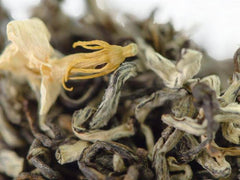
For this method you need a glass with a capacity of 200–300 ml. Why this particular type? This tea “dances”: the leaves rise upward and then sink downward, and this may happen several times. It is not without reason that Jun Shan Yin Zhen is called the tea of three rises and three falls. The leaves move in the water like in a calm waltz, paying no attention to everyday haste.
Rinse the glass with boiling water, add 1–1.5 grams of tea — only a very small amount is needed. Pour water at 65–75°C over it and watch as the leaves begin to open and move in the water. Brew according to your taste, but we do not recommend keeping the tea for longer than 1–1.5 minutes. It can be infused several times.
PU-ERH
Brewing in a gaiwan
Pu-erh should always be rinsed before brewing and should be brewed with boiling water. If the tea is very old, it can be rinsed several times — this removes dust from the leaves and “awakens” the tea. Choose the amount of leaf according to the number of people taking part in the tea session and the size of the vessels. For two or three people, 5–6 grams of tea and a vessel of 100–200 ml is usually enough.
Steep the tea according to your taste; usually 15–20 seconds is enough. It is worth trying different versions and finding the strength of infusion that suits you best — not too weak, but not excessively intense either. Good pu-erhs can withstand many infusions: some continue to produce a rich brew even at the tenth steeping. Most often, pu-erh is brewed 5–7 times.